Most cooked food keeps 3-4 days in the fridge. Raw meat, chicken and fish keep 1-2 days, and cooked rice up to 3 days if it was cooled quickly. Food safety agencies do not fully agree: the UK advises less, 2 days for cooked food and 1 day for rice. The table follows the US and Canadian range, which our recipes also use, and eating sooner is always better. In a freezer at -18°C (0°F), food stays safe, and the freezer times below are about taste and texture.
First, the temperatures
- Fridge: 0-4°C (32-40°F). Many fridge dials show numbers, not degrees, so keep a simple fridge thermometer inside and check it once a week.
- Freezer: -18°C (0°F) or colder. Bacteria do not grow at this temperature, so frozen food stays safe. Over time it does lose flavor and dry out.
- Do not pack the fridge full. Cold air needs to flow between the shelves.
- Keep raw meat, chicken and fish on the bottom shelf, in their packaging or a closed container, so they cannot drip onto ready-to-eat food.
The chart
These are general guidelines for food kept in a closed container and refrigerated promptly. Food safety agencies give slightly different ranges. Where they disagree, we chose the more cautious figure.
| Food | Fridge, 0-4°C (32-40°F) | Freezer, -18°C (0°F) |
|---|---|---|
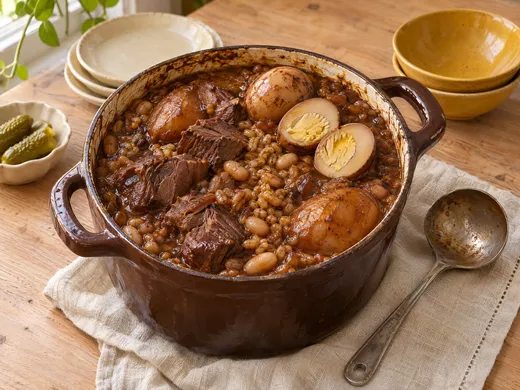
| Cooked dishes: meatballs, stews, kugel, cholent | 3-4 days | 2-3 months |
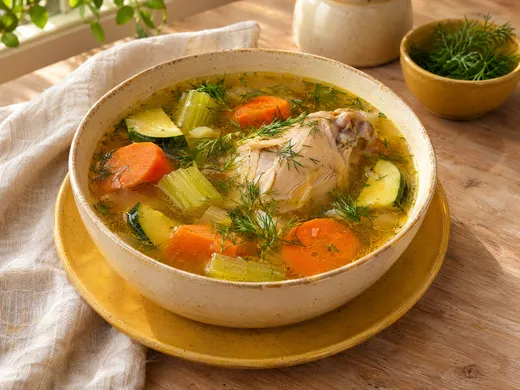
| Soups | 3-4 days | 2-3 months |
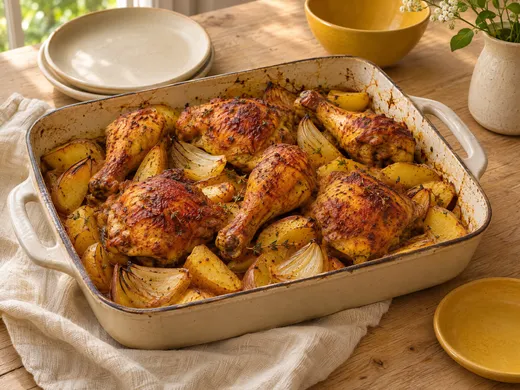
| Cooked chicken | 3-4 days | Up to 4 months |
| Cooked fish | 2-3 days | Possible, but the texture suffers |
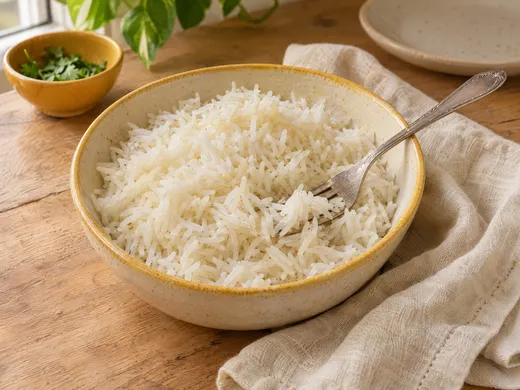
| Cooked rice | Up to 3 days, if cooled within an hour | Only if frozen within an hour of cooking |
| Raw chicken, whole or in pieces | 1-2 days | Pieces up to 6 months, whole up to 1 year |
| Raw ground meat | 1-2 days | 2-3 months |
| Raw cuts of meat: steaks, roasts, stew meat | 2-3 days | 6-12 months |
| Raw fish | 1-2 days | White fish up to 6 months, salmon up to 2 months |
| Fresh eggs in the shell | 3-4 weeks, and never past the date on the egg | Do not freeze in the shell |
| Hard-boiled eggs | Up to 1 week | Do not freeze |
| Soft white cheese, cottage cheese, yogurt (opened) | 3 days | Not recommended; the texture breaks |
| Salads with mayonnaise: egg, eggplant, tuna | Up to 3 days | Do not freeze |
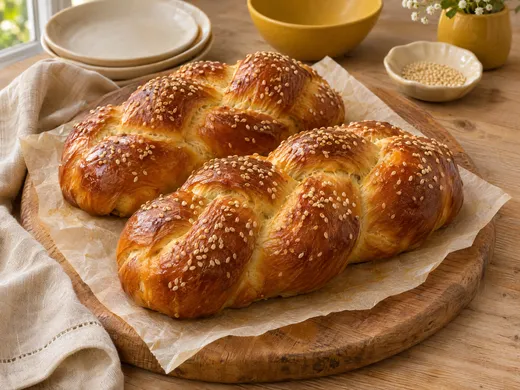
| Challah and bread | 2-3 days in a closed bag, out of the fridge | Up to 1 month, sliced |
| Plain cakes without filling | 3-4 days in a closed box, out of the fridge | Up to 1 month |
| Cakes with cheese, custard or whipped topping | Fridge only, 3-4 days | Baked cheesecake up to 1 month |
Do not keep challah or bread in the fridge, where it goes stale faster than in a closed bag on the counter. Slice and freeze whatever you will not eat within two days, and take out slices as needed.
The 2-hour rule
Perishable food, cooked or raw, should not stay at room temperature for more than 2 hours. On a hot day above 32°C (90°F), such as at a picnic, on a balcony or in a car in summer, the limit drops to 1 hour. The clock starts when the food leaves the fridge, or when it stops being piping hot, and it includes all the time it sits on the table.
Throw away food that has been out longer than that, even if it looks and smells fine. The bacteria that cause food poisoning do not change the smell or taste.
What about “never put hot food in the fridge”? Do not put in a boiling pot, but do not wait for hours either. Divide the food into small, shallow containers, wait until the steam settles, and refrigerate. Cool rice especially fast, ideally within an hour.
Power outage
- Keep the fridge and freezer doors shut as much as you can.
- A closed fridge stays cold for about 4 hours.
- A full freezer holds for about 48 hours, a half-full one for about 24.
- Throw out meat, chicken, fish, dairy, eggs and leftovers that were above 4°C (40°F) for more than 4 hours.
- Frozen food that still has ice crystals can go back in the freezer or be cooked.
How to freeze well
- Freeze early. If you know you will not eat something within two days, freeze it as soon as it has cooled, not after it has sat in the fridge for days.
- Portion it. A box with one or two servings thaws faster, and you take out only what you need. Freezer bags laid flat take less space and thaw quickly.
- Leave room. Soups and sauces expand as they freeze, so do not fill the container to the top.
- Label it. Write what is inside and the date it went into the freezer.
- Fresh meat and chicken go into the freezer by the date on the package, not after. If they stay frozen in the original package for more than two months, add a layer of plastic wrap or a bag.
- Thaw in the fridge and use within 24 hours of fully thawing. All the safe thawing methods are in our safe cooking guide.
Shabbat food: cholent, hot plates and leftovers
Bacteria multiply fast between 4°C and 60°C (40-140°F). So cholent, rice and chicken waiting on a Shabbat hot plate (plata) are fine as long as they stay very hot. What matters is that the food goes onto the hot plate already cooked and boiling hot, and stays hot, rather than warming slowly from cold.
- Hot plates vary, especially a small plate under a big pot. If you have a thermometer, check once that food on your hot plate stays above 60°C (140°F).
- Boil dried beans, especially red kidney beans, properly before the long cook. Slow cooking at low heat does not destroy the natural toxin in them; boiling does. That is why our cholent simmers on the stove for an hour and a half first.
- After the meal, take the pot off the hot plate, move the leftovers to small containers and refrigerate within 2 hours.
- Take salads, fish and cold desserts out of the fridge close to mealtime, not in the morning. On a hot Shabbat with a long meal, put them back in the fridge after an hour.
For halachic questions, such as what may be placed on the hot plate on Shabbat and when, ask a rabbi.
When to throw it out
- When in doubt, throw it out. Food poisoning costs more than a box of leftovers.
- Do not eat moldy food. Scraping off the mold does not necessarily remove all the toxins.
- A sour smell, a slimy texture or a bulging container are signs of spoilage. But even without them, the times in the chart are what count.