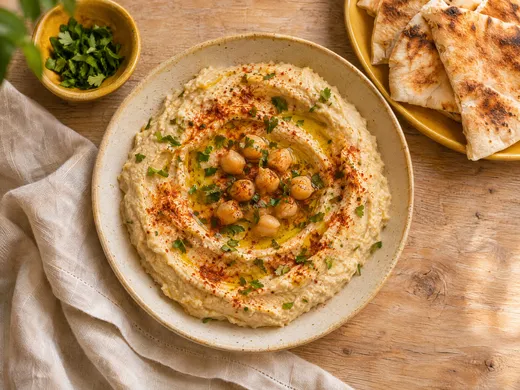
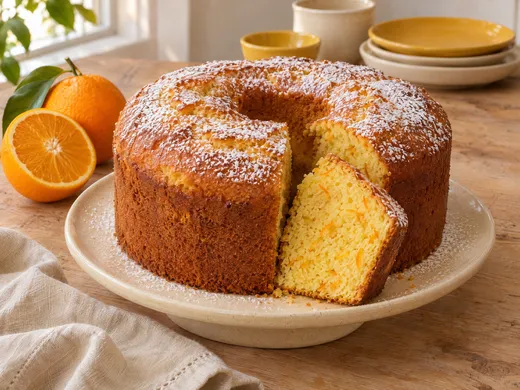
For frying, baking and wok stir-fries, use canola or sunflower oil: they have no strong flavor and handle high heat. Keep olive oil for dishes where you want to taste it, such as salads, hummus, tahini and focaccia. For everyday cooking, like softening onions for a stew, the type hardly matters.
Three kinds of oil
- Neutral oil: canola or sunflower. No taste, no smell, heat-stable and affordable. This is the oil for frying, baking and the wok. Our recipes usually say “canola oil”, and sunflower oil always works instead. Corn, soybean and US “vegetable oil” behave much the same.
- Olive oil. It has a flavor of its own, fruity and sometimes peppery or slightly bitter. It is excellent in salads, hummus, tahini sauce, matbucha, focaccia and pizza, and perfectly fine for everyday cooking and quick frying.
- Strong-flavored oils: sesame and coconut. Use them for their flavor, in small amounts.
Smoke point, in plain words
Smoke point is the temperature at which oil starts to smoke in the pan. Past it, the oil breaks down and tastes bitter and burnt, so you want to stay below it.
Canola and sunflower oils start to smoke at about 220-240°C (430-465°F). Extra virgin olive oil smokes lower, and the sources don’t agree on how much lower: the canola industry reports about 165°C (330°F), while the olive oil industry reports about 175-210°C (350-410°F). Olive oil producers add that smoke point isn’t the whole story and that olive oil holds up well when heated.
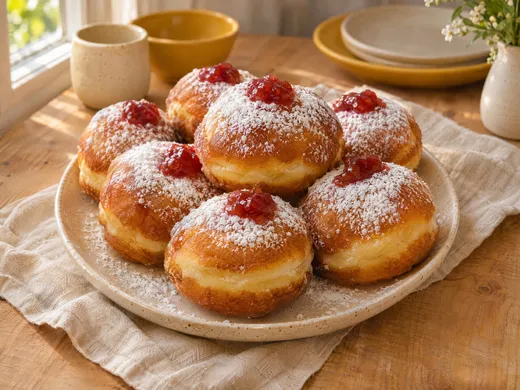
In practice, home deep frying happens at about 160-190°C (325-375°F). Sufganiyot fry at the lower end and falafel at about 175°C (350°F). The simple rule: if the oil smokes before the food goes in, it is too hot, so turn the heat down. Oil that has already been used several times starts to smoke sooner.
Frying and deep frying
- Deep frying: canola or sunflower oil. It is also about money: a pot of doughnuts takes about 1 liter (4 cups) of oil.
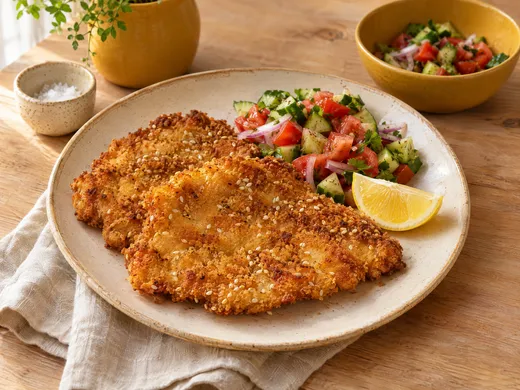
- Shallow frying, like schnitzel or latkes: the same oils, about 1 cm (½ in) deep in the pan.
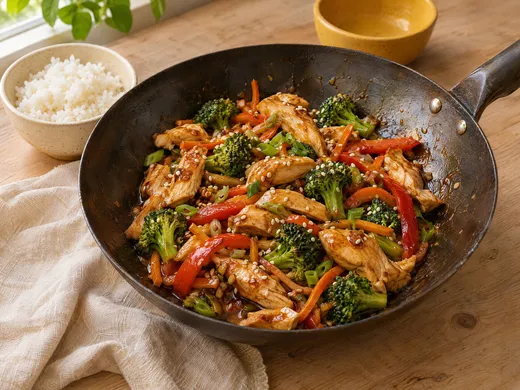
- Wok and stir-fries: canola. The heat in a wok is very high, and a neutral oil handles it better. Add sesame oil only at the end, for flavor, as in the chicken stir-fry.
- Quick cooking with a little oil, like an omelette, onions for a stew or shakshuka: any oil works, olive oil included.
A few rules for any frying: pat food dry before it goes in, because water makes oil spatter. Fry a few pieces at a time so the oil doesn’t cool down and the food doesn’t soak up oil. And never put water on burning oil: cover the pan with a lid and turn off the heat.
Baking
For oil-based cakes, brownies, challah and yeast cakes, use canola or sunflower oil. They add no flavor and keep the cake moist, as in our orange cake.
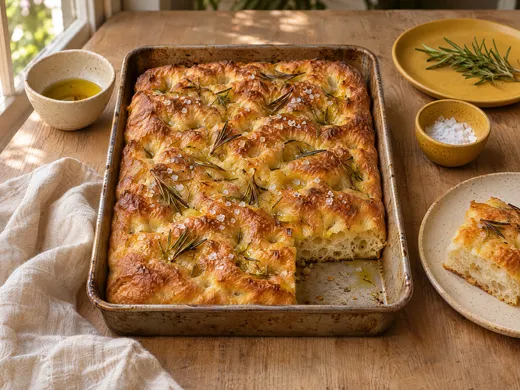
Olive oil in baking is a matter of taste. In focaccia, pizza and bread it is part of the point. In a cake you can use it, but you will taste it, so pick a mild one.
Salads and cold dishes
This is where olive oil’s flavor comes through most, so this is where your best bottle belongs: Israeli salad, hummus, tahini sauce and matbucha. For dressings where you don’t want an olive taste, use canola.
Sesame oil and coconut oil
- Toasted sesame oil: dark and very fragrant. Drizzle a teaspoon over a finished stir-fry or into a sauce; don’t fry in it.
- Coconut oil: solid in a cool kitchen and melts at about 25°C (78°F). Virgin coconut oil smells of coconut and suits baking or a quick sauté, not deep frying. Refined coconut oil has no flavor. Most of its fat, 80-90%, is saturated, so Harvard’s Nutrition Source suggests using it only now and then, in small amounts, and choosing olive or canola oil for everyday cooking.
Can you reuse frying oil?
Yes, if you look after it:
- Let the oil cool completely in the pot.
- Strain it through a fine sieve lined with paper towel, to remove crumbs that would burn next time.
- Store it in a closed jar or bottle in a cool, dark place.
Replace it when it turns dark, smokes earlier than usual, smells off or has sediment at the bottom. Oil used for fish will pass its smell to whatever you fry next. And don’t pour used oil down the sink: let it cool, close it in a bottle and put it in the trash.
How to store oil
Light, heat and air spoil oil. Keep it tightly closed, ideally in dark glass or a tin, somewhere cool and dark and away from the stove. Oil usually keeps about a year from the production date. If the smell or color changes, replace it. And since olive oil is expensive, buy a bottle you’ll finish within a few months.